
Best IPTV Encoder: Complete Guide to HD and 4K Video Encoding Solutions
The demand for professional IPTV streaming infrastructure has transformed video encoding from broadcast-exclusive technology into an essential component for hospitality, corporate, educational, and commercial applications. We examine IPTV encoder solutions, technical specifications, and selection criteria for professional streaming deployments.
An IPTV encoder converts traditional video signals into compressed digital streams optimized for IP network transmission. These devices transform HDMI, SDI, or composite signals into efficient formats suitable for distribution over standard network infrastructure.
Understanding IPTV Encoder Technology and Architecture
Core Encoding Functions and Signal Processing
An iptv encoder performs multiple critical operations transforming raw video into streamable content suitable for IP network distribution:
Video Signal Acquisition and Processing:
- HDMI and SDI input capture supporting resolutions from 480p through 4K UHD (3840×2160)
- H.264 (AVC) and H.265 (HEVC) compression reducing bandwidth requirements by 100:1 or greater
- Hardware acceleration through dedicated ASIC or FPGA processors ensuring consistent real-time performance
- Multi-bitrate encoding supporting adaptive streaming delivery across varying network conditions
- GOP (Group of Pictures) structure optimization balancing compression efficiency with latency requirements
- Audio embedding and processing with support for AAC, MP3, Dolby Digital, and other professional codecs
- Video processing features including deinterlacing, scaling, frame rate conversion, and color correction
Stream Delivery Protocols:
- UDP/RTP multicast for efficient one-to-many distribution minimizing network bandwidth
- HLS (HTTP Live Streaming) segmentation for mobile adaptive delivery and CDN compatibility
- RTMP for legacy platform integration and CDN ingest workflows
- SRT (Secure Reliable Transport) for low-latency internet streaming with error correction
- MPEG-TS packetization for traditional broadcast infrastructure compatibility
- RTSP streaming protocol support for professional surveillance and production applications
Network Integration Capabilities:
- Gigabit Ethernet connectivity supporting multiple simultaneous high-bitrate streams
- IGMP protocol implementation for managed multicast environments preventing network flooding
- QoS (Quality of Service) packet tagging ensuring streaming traffic prioritization during congestion
- SNMP monitoring integration with enterprise network management systems
- RESTful API control enabling automation and custom workflow integration
- Authentication mechanisms including username/password and IP-based access control
The sophistication of modern IPTV encoders extends beyond simple compression, incorporating advanced features like logo insertion, closed caption embedding, timecode preservation, and real-time stream health monitoring that professional deployments require.
HD IPTV Encoder vs 4K IPTV Encoder: Technical Comparison
Resolution capabilities fundamentally define encoder classification, pricing, and deployment suitability across different application contexts:
HD IPTV Encoder Specifications:
- Resolution Support: 1080p (1920×1080) at 60fps and 720p (1280×720) progressive scanning
- Bitrate Requirements: 2-8 Mbps for broadcast-quality content depending on motion complexity
- Latency Performance: 200-500ms glass-to-glass delay in standard configurations
- Power Consumption: 10-25 watts per encoding channel enabling high-density rack deployments
- Price Range: $300-1,500 per encoder channel depending on features and manufacturer
- Codec Efficiency: Works well with both H.264 and H.265 for bandwidth optimization
- Best Applications: Corporate communications, educational streaming, mid-scale hospitality, houses of worship, community television
4K IPTV Encoder Specifications:
- Resolution Capability: Ultra HD (3840×2160) at 30fps or 60fps progressive
- Bitrate Demands: 15-40 Mbps depending on content complexity and codec selection
- Codec Requirements: H.265 (HEVC) essential for practical bandwidth management
- Power Consumption: 40-80 watts per channel reflecting increased computational demands
- Investment Range: $1,800-5,000 per encoder unit for professional-grade solutions
- Advanced Features: HDR support, 10-bit color depth, enhanced audio processing capabilities
- Target Deployments: Premium hospitality installations, professional sports broadcasting, digital signage networks, high-value corporate presentations
Bandwidth Impact Analysis:
For a 100-room hotel, the bandwidth difference becomes significant:
- HD Deployment: 100 rooms × 4 Mbps = 400 Mbps total network capacity required
- 4K Deployment: 100 rooms × 20 Mbps = 2 Gbps total network capacity required
Organizations must carefully evaluate whether 4K resolution justifies the 5× increase in bandwidth consumption and infrastructure investment, particularly when many end-user displays and network segments remain HD-limited. The transition to 4K should align strategically with viewer device capabilities, content value proposition, and available network infrastructure capacity.
HDMI Video Encoder Technology and Implementation
HDMI IPTV Encoder Connectivity and Standards
The hdmi iptv encoder represents the predominant implementation for digital video conversion in modern IPTV deployments, offering significant advantages over legacy analog connectivity:
HDMI Interface Advantages:
- Digital Signal Integrity: Uncompressed digital transmission eliminating analog conversion artifacts and quality degradation
- HDCP Management: High-bandwidth Digital Content Protection handling for commercial content sources where legally authorized
- Multi-Channel Audio: Embedded audio channels supporting up to 8 discrete audio streams within single HDMI connection
- Automatic Configuration: EDID (Extended Display Identification Data) management for automatic source device configuration
- Advanced Color Support: HDR metadata passthrough, Rec. 709 and Rec. 2020 color spaces, 10-bit color depth
- Simplified Cabling: Single-cable solution carrying video, audio, and control signals reducing installation complexity
HDMI Source Device Compatibility:
- Set-top boxes and satellite receivers for broadcast television encoding and redistribution
- Media players and streaming devices for VOD content acquisition
- Professional cameras and video production equipment for live event coverage and studio production
- Computer outputs for corporate presentations, digital signage content creation, and training materials
- Gaming consoles for esports broadcasting and interactive content distribution
- Medical imaging equipment for telemedicine and remote diagnostic applications
HDMI Implementation Considerations:
Professional hdmi video encoder units must navigate HDCP (High-bandwidth Digital Content Protection) encryption commonly present in commercial content sources. Enterprise-grade encoders incorporate licensed HDCP management capabilities where legally permissible under applicable copyright and licensing frameworks, though content distribution restrictions vary significantly by jurisdiction, content type, and intended use case.
Organizations deploying encoders for commercial content redistribution should conduct comprehensive legal review and obtain appropriate licensing agreements with content rights holders before implementation. Numerous legitimate applications exist for HDMI encoding without encountering copyright restrictions, particularly when encoding self-produced content, original corporate communications, educational materials created internally, or public domain content.
HDMI Version Compatibility Requirements:
Modern encoder deployments should prioritize HDMI 2.0 or newer specification support to enable:
- 4K resolution at 60fps frame rates for smooth motion reproduction
- HDR (High Dynamic Range) metadata passthrough preserving enhanced contrast and color
- Enhanced Audio Return Channel (eARC) for advanced audio format support
- Increased color depth options and 4:4:4 chroma subsampling for professional applications
Organizations deploying 4k iptv encoder solutions must verify HDMI 2.0 specification compliance across the entire signal chain from source devices through encoders to distribution infrastructure, as any HDMI 1.4 bottleneck will limit the system to 4K30fps maximum or force resolution downgrade.
✅ Tip: Always test IPTV with a free trial or 24-hour pass before committing to long-term plans.
Hardware IPTV Encoder vs Software Encoder Architecture
The fundamental choice between hardware and software encoding significantly impacts performance characteristics, operational costs, and deployment flexibility:
Hardware IPTV Encoder Advantages:
- Dedicated Processing: ASIC or FPGA processors specifically optimized for video compression algorithms
- Deterministic Latency: Predictable, consistent latency characteristics essential for live broadcast applications
- Encoding Density: Superior channel count per rack unit compared to software alternatives (10-16 HD channels per 1RU)
- Power Efficiency: Lower power consumption per channel (10-25W vs 50-150W) reducing operational costs
- Operational Reliability: Enhanced stability through elimination of operating system-related failure modes
- Simplified Management: Purpose-built interfaces designed specifically for encoding workflows
- Ideal Applications: 24/7 broadcast operations, mission-critical hospitality deployments, high-density encoding farms, applications demanding guaranteed sub-second latency
Software IPTV Encoder Benefits:
- Deployment Flexibility: Operates on commodity server hardware, virtual machines, or cloud infrastructure
- Rapid Innovation: Codec updates and feature additions through software patches without hardware replacement
- Scalability Models: Horizontal scaling through additional compute nodes rather than specialized hardware procurement
- Cost Structure: Lower initial capital expenditure with operational expense model for cloud deployments
- Development Agility: Rapid testing and deployment of encoding parameter changes
- Integration Capability: Easier integration with broader video production workflows and automation platforms
- Ideal Applications: Cloud-based OTT services, development and testing environments, seasonal demand scenarios, applications tolerating 2-5 second latency
Hybrid Deployment Scenarios:
Many professional installations adopt hybrid architectures combining dedicated hardware encoders for primary channels requiring guaranteed performance with software encoding for overflow capacity, redundancy, or specialized processing tasks. This approach optimizes capital expenditure while maintaining operational flexibility.
We observe hardware encoders continuing to dominate professional broadcast and hospitality IPTV deployments where reliability and deterministic performance justify premium pricing, while software solutions gain substantial traction in cloud-based OTT services and corporate applications where 2-3 second latency remains acceptable and deployment flexibility provides strategic advantages.
Best IPTV Encoders in the Market
Enterprise-Grade Solutions
1. Haivision Makito X4
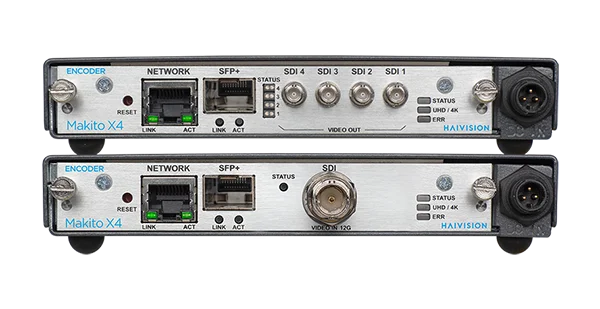
- 4K60fps with H.264/H.265 encoding
- Sub-100ms ultra-low latency modes
- Redundant power, FIPS encryption, SRT protocol
- Applications: Broadcast, government, healthcare
2. Harmonic VOS 360

- 4K60 HDR with multi-codec support
- Cloud-ready with AI optimization
- 10 simultaneous ABR renditions
- Applications: OTT platforms, large-scale IPTV
3. AWS Elemental Live
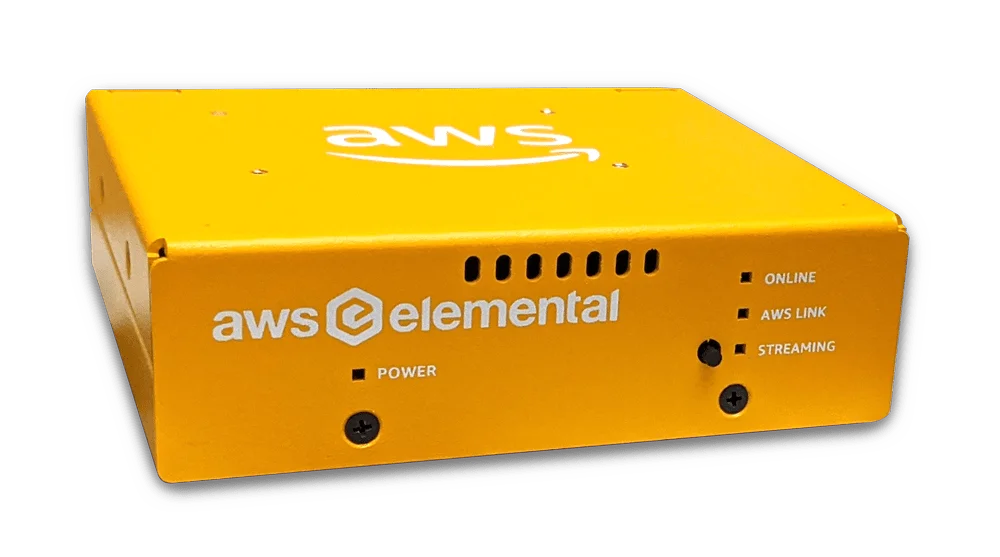
- 4K60 HDR with 16 HD channels per 2RU
- AWS integration, motion-adaptive encoding
- SCTE-35 signaling for ad insertion
- Applications: Broadcasters with cloud infrastructure
Professional Mid-Range
4. Matrox Monarch EDGE E4
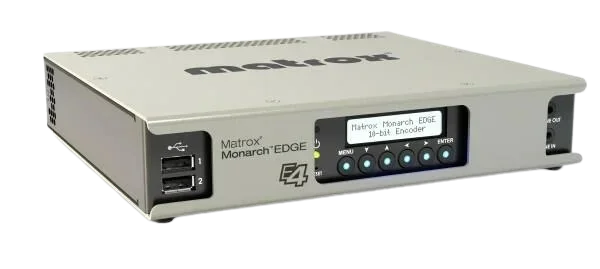
- 1080p60 with H.264/H.265
- 4 simultaneous outputs, RESTful API
- Silent fanless operation
- Applications: Corporate, education, churches
5. Magewell Ultra Encode AIO
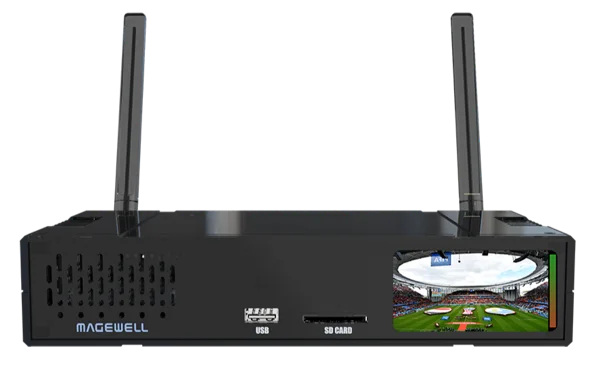
- 1080p60 with dual streaming
- One-touch operation, USB recording
- Mobile app control, web interface
- Applications: Small businesses, continuous streaming
6. Kiloview N40 4K NDI
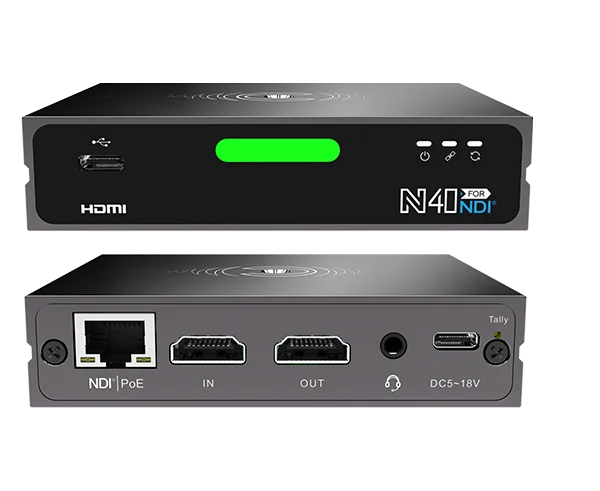
- 4K30 with NDI integration
- PoE support, low-latency encoding
- Multi-protocol output (RTMP, SRT, HLS)
- Applications: Production workflows, multi-camera
Budget-Friendly Options
7. Teradek VidiU Go
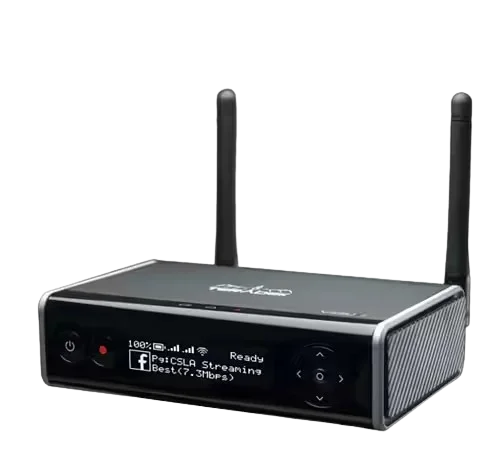
- 1080p60 with cellular bonding
- Battery-powered portable design
- Dual streaming, ShareLink cloud management
- Applications: Mobile journalism, field production
8. Blackmagic Web Presenter 4K
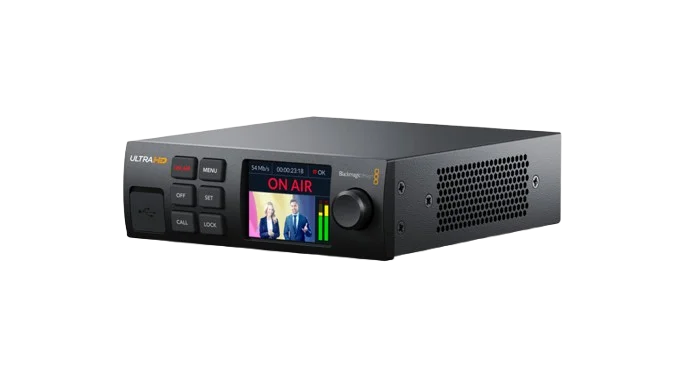
- 4K30 with 12G-SDI input
- USB webcam mode, ethernet streaming
- XLR audio inputs, tally output
- Applications: Budget 4K streaming, presentations
9. URayCoder H.265 4K
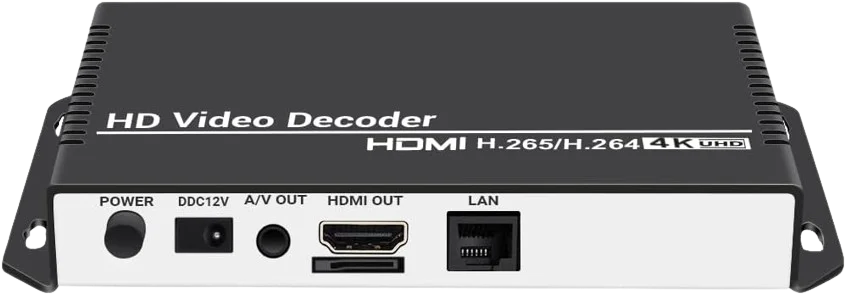
- 4K30 with H.265 encoding
- Multiple protocols, 24/7 operation
- Web-based configuration
- Applications: Small hotels, digital signage
10. AVerMedia Live Gamer Portable 2 Plus
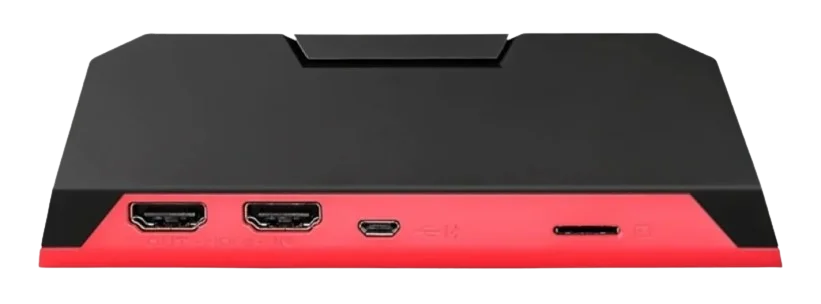
- 1080p60 with 4K passthrough
- Portable with microSD recording
- Touchscreen LCD control
- Applications: Content
Codec Selection and Compression Standards
H.264 vs H.265: Comprehensive Technical Comparison
Codec selection profoundly impacts bandwidth requirements, device compatibility, encoding costs, and viewer experience quality:
H.264/AVC Encoding Characteristics:
- Universal Compatibility: Playback support across virtually all streaming devices, Smart TVs, mobile platforms, and legacy equipment manufactured since 2005
- Computational Efficiency: Lower processing requirements enabling economical hardware implementations and extended battery life on mobile devices
- Mature Optimization: Decades of encoder optimization producing excellent quality-to-bitrate ratios through well-understood parameter tuning
- Licensing Clarity: Established patent pool structure with predictable licensing costs for commercial implementations
- Recommended Applications: Maximum device compatibility requirements, general-purpose streaming targeting diverse audiences, legacy equipment integration, cost-sensitive deployments prioritizing broad reach
H.265/HEVC Encoding Characteristics:
- Compression Efficiency: 40-50% bitrate reduction versus H.264 at equivalent perceived quality enabling bandwidth cost savings
- 4K Enablement: Essential codec for practical 4K content delivery over bandwidth-constrained networks and residential internet connections
- Advanced Features: Native support for HDR (High Dynamic Range), 10-bit color depth, and wide color gamut reproduction
- Processing Demands: Significantly higher computational requirements increasing encoding hardware costs and power consumption by 2-3×
- Compatibility Gaps: Limited decoder support in devices manufactured before 2016-2017, requiring viewer device verification
- Licensing Complexity: Multiple competing patent pools creating uncertainty around total licensing costs
- Recommended Applications: 4K resolution streaming where H.265 becomes practically mandatory, bandwidth-constrained networks serving HD content, premium content justifying encoding cost increases, modern device ecosystems with verified H.265 support
Real-World Bandwidth Comparison:
For identical 1080p60 content at professional quality:
- H.264 encoding: 6-8 Mbps bitrate requirement
- H.265 encoding: 3-4 Mbps bitrate achieving equivalent quality
- Annual bandwidth cost savings for 1,000 simultaneous viewers: $15,000-25,000 depending on CDN pricing
Migration Strategy Recommendations:
Organizations should implement dual-codec strategies during transition periods, simultaneously encoding H.264 for legacy device compatibility and H.265 for modern devices and bandwidth optimization. Player applications detect decoder capabilities and automatically select appropriate streams, maximizing quality for capable devices while maintaining universal accessibility.
Before committing to H.265 deployment, organizations must thoroughly audit target viewer device populations, as incompatible devices require costly replacement or force continued parallel H.264 infrastructure maintenance indefinitely.
Network Infrastructure Planning and Deployment
Bandwidth Requirements and Capacity Planning
Proper network infrastructure design ensures reliable IPTV delivery without quality degradation or service interruptions:
HD Deployment Bandwidth Calculation:
- Single HD stream: 4 Mbps average bitrate
- 50-channel lineup: 50 × 4 Mbps = 200 Mbps multicast bandwidth
- Peak unicast scenario (100 viewers different channels): 100 × 4 Mbps = 400 Mbps
- Recommended network capacity: 1 Gbps switching with 10 Gbps uplinks to core
- Multicast efficiency: Delivers unlimited viewers per channel using only 4 Mbps per channel
4K Deployment Bandwidth Calculation:
- Single 4K stream: 20 Mbps average bitrate (H.265 encoding)
- 20-channel 4K lineup: 20 × 20 Mbps = 400 Mbps multicast bandwidth
- Peak unicast scenario (50 viewers different channels): 50 × 20 Mbps = 1 Gbps
- Recommended network capacity: 10 Gbps switching throughout infrastructure
- Internet uplink requirements: Minimum 1 Gbps symmetrical for external delivery
Network Architecture Prerequisites:
VLAN Segmentation:
- Dedicated IPTV VLANs isolating streaming traffic from general data networks
- Separate management VLAN for encoder configuration and monitoring
- Guest or public VLAN isolation in hospitality environments
- Prevents broadcast storms and quality degradation from unrelated traffic
Quality of Service (QoS) Configuration:
- DSCP marking of IPTV packets for priority queuing (typically EF or AF41)
- Strict priority or weighted fair queuing ensuring streaming traffic prioritization
- Bandwidth reservation guaranteeing minimum throughput during congestion
- Critical for shared networks serving multiple application types simultaneously
IGMP Snooping and Multicast Management:
- IGMP (Internet Group Management Protocol) snooping preventing multicast flooding
- Multicast routing protocols (PIM-SM, PIM-DM) for inter-VLAN distribution
- Proper querier configuration ensuring multicast group membership tracking
- Essential for scaling beyond 10-20 concurrent channels efficiently
Physical Installation Best Practices:
Environmental Requirements:
- Ambient temperature: 10-40°C operational range for most encoders
- Adequate ventilation: Minimum 6 inches clearance for rack-mounted equipment
- Humidity control: 20-80% relative humidity non-condensing
- Rack cooling: 1-2 BTU per watt heat dissipation planning
Power Infrastructure:
- UPS (Uninterruptible Power Supply) protection for mission-critical installations
- Minimum 30-minute runtime for graceful shutdown during extended outages
- Redundant power supplies in enterprise-grade encoders
- Power consumption calculation: 15-30W per HD channel, 50-80W per 4K channel
Cable Management:
- HDMI cable length limits: 15 meters passive, 30 meters with active cables or fiber extenders
- Category 6A or better Ethernet cabling supporting 10GBASE-T for future-proofing
- Proper strain relief preventing connector damage and signal degradation
- Organized cable routing facilitating troubleshooting and maintenance access
Security and Access Control:
- Physical security preventing unauthorized encoder access or configuration changes
- Locked equipment racks in shared facility environments
- IP-based access control lists limiting management interface accessibility
- Strong authentication credentials changed from factory defaults
Application-Specific Deployments
Hospitality, Corporate, and Educational Use Cases
Hotel and Resort IPTV Systems:
- Broadcast television channel encoding for in-room entertainment distribution across properties
- Custom branded channels showcasing hotel amenities, local attractions, and promotional content
- Pay-per-view movie services integrated with property management and billing systems
- Conference and event feed distribution enabling remote participation from guest rooms
- N+1 redundancy configurations ensuring continuous service availability
- VLAN segmentation isolating guest entertainment from property management networks
Corporate Communication Applications:
- Executive webcasts and company-wide town hall meetings reaching distributed workforce
- Conference room capture enabling remote office participation in collaborative sessions
- Digital signage content creation and distribution across campus or multi-site deployments
- Training video production, archival, and on-demand delivery through learning platforms
- Enterprise authentication integration with existing identity management systems
Educational Institution Implementations:
- Lecture capture for distance learning programs supporting hybrid and online education
- Campus television stations enabling student media production and journalism training
- Sports event broadcasting for remote fan engagement and athletic program promotion
- Administrative announcements and emergency communications across distributed campuses
- Simultaneous live streaming and recording maximizing content value and accessibility
Hospitality IPTV deployments require professional-grade reliability with redundant encoder configurations, comprehensive monitoring, and 24/7 technical support ensuring guest satisfaction and operational continuity.
Selection Criteria and Procurement
Critical Specifications
Technical Requirements:
- Input interfaces matching source equipment
- Resolution and frame rate support needed
- Required codecs (H.264, H.265)
- Output protocols (multicast, HLS, RTMP, SRT)
- Multi-bitrate capability for adaptive streaming
Performance Factors:
- Encoding latency specifications
- Simultaneous stream capacity
- Power consumption and cooling
- MTBF and reliability ratings
- Redundancy features (dual power, network)
Management Features:
- Web GUI, CLI, or API control
- SNMP monitoring integration
- Firmware update capability
- Comprehensive logging
- Third-party compatibility
Commercial Considerations:
- Initial acquisition costs
- Ongoing licensing fees
- Support terms and SLA commitments
- Warranty coverage and RMA
- Upgrade path availability
2. Matrox Monarch Series – Best Value for Corporate Streaming
Matrox offers compact, affordable encoders balancing professional features with accessible pricing for corporate and educational markets.
Core Capabilities:
- Dual simultaneous 1080p60 H.264 streams
- Local recording to USB drives or SD cards
- HDMI and SDI input options
- RESTful API for automation and integration
- Fanless operation for noise-sensitive environments
Advantages:
- Competitive pricing: $1,200-2,500 range
- Simple configuration reducing deployment complexity
- Reliable performance with minimal maintenance requirements
- Strong integration with popular streaming platforms
Target Markets: Corporate webcasts, educational lecture capture, house of worship services, small-scale live events.
Limitations: Maximum 1080p resolution (no 4K support), basic audio processing compared to premium alternatives.
Troubleshooting and Maintenance
Common Issues:
Video Quality:
- Symptoms: Pixelation, blocking, blur
- Solutions: Increase bitrate 25-50%, verify source, adjust GOP
Audio Sync:
- Symptoms: Lip sync errors
- Solutions: Adjust delay compensation, verify timestamps
Network Failures:
- Symptoms: Stream dropout, buffering
- Solutions: Verify QoS, check bandwidth, validate firewall
Maintenance Schedule:
- Daily: Automated health checks
- Weekly: Performance review, backups
- Monthly: Physical inspection, cleaning
- Quarterly: Comprehensive validation
- Annually: Firmware updates, capacity planning
Conclusion:
IPTV encoder technology provides the foundation for professional video distribution across hospitality, corporate, educational, and broadcasting applications. We’ve examined specifications, vendor solutions, and deployment practices informing encoder selection for organizational requirements.
Organizations must balance video quality versus bandwidth, latency versus compression, capital versus operational costs, and current versus future needs. Successful selections align with specific application requirements and infrastructure constraints.
For organizations implementing IPTV, comprehensive requirements definition and pilot testing validate specifications before large-scale deployment. The encoder market continues evolving with software solutions, cloud services, and AI optimization.
Priority should focus on solutions offering upgrade paths and architectural flexibility for future enhancements. Professional installation, testing, and ongoing monitoring ensure sustained operational excellence across multi-year lifecycles.
Frequently Asked Questions (FAQs):
An IPTV encoder converts video signals (HDMI, SDI) into compressed digital streams using H.264 or H.265 codecs, reducing file sizes by 100:1 while maintaining quality for IP network distribution.
An hd iptv encoder requires 2-8 Mbps per stream depending on content. Total bandwidth equals stream bitrate × simultaneous viewers + 20-30% overhead.
H.264 offers universal compatibility with lower costs. H.265 provides 40-50% better compression, essential for 4K but requires modern devices and more encoding power.
Yes, with proper configuration: sufficient bandwidth, VLAN support, IGMP snooping, and QoS. Older equipment may need gigabit or 10 gigabit upgrades for 4k iptv encoder deployments.
Latency comes from buffering (50-200ms), compression (100-500ms), packaging (50-100ms), network transmission (10-100ms), and client buffering (1-5 seconds). Ultra-low latency achieves 100-300ms total.
Professional encoders support 2-16 simultaneous outputs for adaptive bitrate delivery with multiple resolutions and protocols from a single input.
4K encoders process 4× more pixels, require 15-40 Mbps versus 2-8 Mbps, need H.265 compression, consume more power (40-80W vs 10-25W), and cost $1,800-5,000 versus $300-1,500.
Firmware updates (quarterly), configuration backups (weekly), physical cleaning (quarterly), continuous monitoring, and monthly validation testing ensure optimal performance.
About Us
Xtreamwatch brings you smooth, high-quality IPTV streaming — live TV, movies, and sports, all in one place. Stream anytime, on any device.
 English
  Deutsch
  Français
  Español
  Italiano
  العربية
  Dansk
Dansk  Nederlands